
As a health coach, I work with women who feel like they’ve lost a sense of themselves after becoming mothers—helping them rebuild confidence, set boundaries, and redefine their identity beyond just “mum.” Whether you’re figuring out if returning to work is right for you, exploring a career change, or simply trying to find balance in this new chapter, I’m here to support you.

We are pretty lucky in the UK. As someone with partly American family, I can appreciate the perils of having to pay for healthcare in the US, with the average cost of having a baby in the being around $18,000 (over £14,000). Thanks to our NHS, we are fortunate to be able to pop our babies out without charge. Also, when it comes to having a child while employed – we also have the right to a year’s maternity leave, while partners are eligible for two weeks of paid paternity leave; with shared parental leave options allowing families to divide this time more flexibly. So we don’t have to worry about popping out a baby and navigating the workplace – right? Let’s see about that…
The reality of returning to work

Despite the benefits mentioned above, the reality for many UK mothers is far from easy. A survey by Pregnant Then Screwed found that 43% of mothers returned to work within 12 weeks of giving birth due to the UK’s low statutory maternity pay (SMP). After the first six weeks at 90% of your earnings, SMP drops to just £184.03 per week—less than the national living wage. Unsurprisingly, 76% of mothers have had to rely on debt or savings to survive maternity leave.
While shared parental leave is an option, statistics and societal norms often mean that the higher earner (still predominantly men) continues working full-time. This leaves many mothers shouldering the brunt of childcare while trying to reintegrate into the workplace.
Childcare costs vs. work hours
So you reach that miserable point of the maternity leave bubble where you need to start weighing up the cost of working hours vs childcare costs — likely because SMP has run out and your employer isn’t offering much support. The financial strain is real. I was lucky not to face this decision until 11 months postpartum, but from 9 months onwards, I had zero income and had to rely on savings (and the bank of husband!)
Some mothers feel ready to go back to work with a desire to try and regain a piece of themselves that they lost after having their child. However, Pregnant then screwed found in 2023 that:
76% of mothers who returned to work said it was sooner than they wanted, mainly due to financial pressure.
And 86% said the cost of childcare forced them to reduce hours, change jobs, or leave work altogether.
While the UK government has made positive changes to childcare entitlements over the past few years—gradually expanding free childcare hours from age three to as early as nine months (see breakdown below) — costs remain a significant burden.
For a mother needing full-time childcare, the numbers can be staggering:
- The UK average cost of childcare is around £60 per day.
- A full-time nursery placement (8 AM – 6 PM) for just one child could cost around £1000 per month after subsidies.
- Free funding only covers 38 weeks of the year in line with school term times, which gives 14 weeks of unfunded childcare, this could incur thousands of pounds of extra childcare fees per year.
Let’s take a closer look at those 14 unfunded weeks. In the UK, employees are legally entitled to 5.6 weeks of paid annual leave a year – you do the math….

To put this into perspective, from April 2025, a full-time worker earning the National Living Wage (£12.21 per hour) will make £23,873.60 per year. After taxes and approximate childcare costs, that could leave just over £1,000 per month to support both mother and child, as well as pay the rent, mortgage, bills etc. For many, this raises a difficult question:
Is working full-time financially viable?

The motherhood penalty
Returning to work isn’t just about finding childcare—it’s also about navigating an employment landscape that can be unsupportive of working mothers.
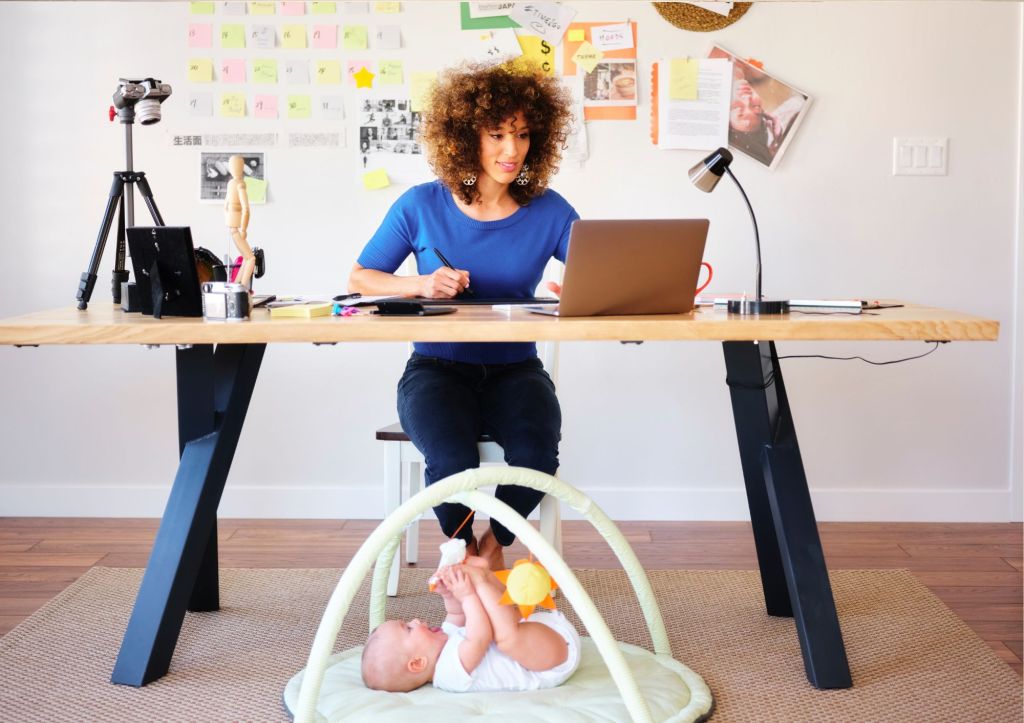
Many workplaces still operate with an outdated mindset, expecting parents to throw themselves back into work like they hadn’t just had a huge period of time off – 1 in 3 of those surveyed by the working families and SFHA Report (2023) said employers did not support a flexible return, making the transition event harder.
Also there seems to be an expectation to work excessive hours to prove dedication. Not only this, but us as mothers also feeling like we have to prove our worth, giving in to these expectations, making us miss out on the important family moments that we should have been able to attend – something I fell into when I went back to work after my second child. The fear of being overlooked for promotions or judged for taking time off when a child is ill creates an unspoken pressure to do more.
The Fawcett Society Report found in 2023 that 44% of working mothers believe that taking maternity leave negatively impacts career progression. With a shocking 40% feeling like they have to work harder than colleagues to prove themselves after returning. An incredibly powerful statistic from the Women in the Workplace Report by Lean In & Mckinsey found that 78% of women in leadership believe that motherhood slows career progression.
This phenomenon, often referred to as the ‘motherhood penalty,’ sees many women facing stagnated career progression, lower pay, and even job loss after having children.
Returning to work after maternity leave presents significant challenges for many UK mothers. A report by The Female Lead revealed that 52% of working mothers were dissatisfied with the support they received upon returning, and 35% found their work arrangements unsustainable, leading nearly half of this group to consider leaving their jobs within a year.
Additionally, a study by Totaljobs and the Fawcett Society found that over 80% of working mothers faced difficulties resuming work post-maternity leave, with 30% reporting a complete lack of employer support and 16% experiencing discrimination related to their parenting responsibilities.
These statistics highlight the pressing need for improved support systems to facilitate a smoother transition for mothers re-entering the workforce, however the landscape isn’t the same throughout all workplaces, with flexible working and core hour models being adopted by many, to support childcare demands.
Career crisis: is this the job you really want?
Beyond the need for flexibility, returning to work after maternity leave can prompt a much deeper question—Do I even want to do this job anymore?
Many mothers return to work only to realise their passions, priorities, and career ambitions have shifted. I for one felt this way, going back to my workplace because it felt safe and familiar, but I wasn’t sure if it was what I wanted to do. Thoughts around this can be quite overwhelming; when was the last time you updated your CV, when was the last time you prepped for a job interview? Are my skills up to date and relevant?
But I see a change up of career a really exciting prospect.

The thought of opening yourself up to the world of different occupations, career paths and interests – finding where YOU belong, rather than what is easy and convenient within your current ecosystem.
I felt like to be true to myself and my family, I needed to be happy with my working environment. Our children are incredibly impressionable beings and are wholly inspired by you – so doing something for yourself (like finding a job you like) will 100% positively impact their perception of the world around them, especially when they grow up and create their own career paths.

If you feel like I once did, and are feeling stuck in a job that no longer excites you, here are some steps to help you figure out your next move:
- Reflect on what you enjoy – think about what aspects of work energise you and what drains you. Is it the industry, the company, or the role itself that doesn’t feel right?
- Update your CV & LinkedIn – start refreshing your CV, highlighting transferable skills and new experiences you’ve gained.
- Explore job sites – browse job descriptions to see what roles catch your eye. Platforms like Indeed, LinkedIn, and Glassdoor can help you understand what’s out there. Save some descriptions of the roles you like for reference.
- Take career quizzes – online career assessments can provide insights into roles that align with your strengths and interests.
- Attend employability workshops – many local councils and organisations offer free career development workshops, networking events, and CV-building sessions.
- Consider upskilling – If your dream job requires new skills, explore online courses, professional certifications, or part-time study options. It’s a hard gig when you have a family to care for too, but online courses that you can chip away at on evenings when the kids go to bed, could be a really good way to upskill yourself in an area of interest. That’s how I trained to become a health coach!

Changing careers can feel daunting, but taking small steps can help you move towards a job that aligns better with your new priorities and passions. Whether you decide to switch industries, start a business, or go freelance, the key is to explore your options and take action towards a fulfilling career.
Finding the work/life balance
We’ve talked a lot about navigating our careers, but let’s be real—balancing motherhood and returning to work is a deeply personal journey. The key is finding what works for you. And if it takes a few tries to figure that out, don’t be discouraged.
After my first baby, I returned to work part-time (I was full time prior) and it was a huge adjustment, trying to squeeze my work into fewer hours was tough and I tried to catch up outside of my contracted hours. Working outside of regular working hours is something I see all too often from many mum friends (myself included), taking away from precious time with the ones we love and not being present.
By the time baby number two came along, I was promoted into a full-time role, with evening and weekend demands. It completely overwhelmed me, and I hit breaking point. Eventually, I found a flexible role that truly worked for me and my family—and it changed everything.
They say you have to break a few eggs, and it’s true. No one fully prepares you for life after kids. People will give you plenty of advice, but ultimately, you carve your own path—and that’s okay. No job is permanent, and you absolutely have the power to change your situation. I promise. 💛
So, how do we find the elusive balance between professional ambition and motherhood?
The answer is different for everyone, but here are a few key strategies:
- Negotiate flexibility – if your employer offers remote work or flexible hours, take advantage of it. Compressed hours, job-sharing, or part-time work could provide a better balance. UK employment legislation changed in 2024, stating that all employers must offer employees the right to request flexible work from Day 1 (rather than waiting at least 26 weeks) so if you are in a new role, don’t let that deter you asking the question.
- Reassess your career path – many mothers pivot to self-employment, freelancing, or starting a business to gain control over their time.
- Build a support network – whether it’s family, friends, or mum groups, having a support system can help lighten the load.
- Prioritise self-care – burnout benefits no one. Carve out time for yourself, even if it’s just an hour a week to do something you love.
- Challenge workplace norms – advocate for better maternity policies, equal pay, and workplace inclusivity. The more we push for change, the better the future for working mothers.
Balancing professional and mummy identities is a constantly evolving process. Some days you’ll feel like you’re excelling at both, and others you’ll feel like you’re failing at everything. But the truth is, you’re doing an amazing job. The key is to find what works for you and your family—because no one else is walking in your shoes.

How have you found the transition back to work after maternity leave? Share your experiences in the comments!
Balancing work and parenthood: what are my childcare options?
When planning your future finances post-baby, it’s helpful to weigh up what is currently available, to see what you can work with:
Flexible working options
Under UK law, employees have the right to request flexible working, which can include:
- Part-time hours
- Job sharing
- Remote or hybrid working
- Compressed hours (working full-time hours over fewer days)
Employers must consider these requests “reasonably,” though they can refuse them for business reasons.
Shared parental leave (SPL)
Instead of taking all 52 weeks of maternity leave, parents can share up to 50 weeks of leave and 37 weeks of pay. This allows some mothers to return to work earlier while the father/partner stays home. However, uptake remains low due to financial constraints.
Keeping in touch (KIT) days
Mothers on maternity leave can work up to 10 days without ending their leave. These days help ease the transition back into the workplace and can be useful for meetings or training.
Workplace support
- Gradual return to work: some employers offer phased returns (e.g., starting with fewer hours).
- On-site or subsidised childcare: some companies offer workplace nurseries or childcare support.
- Parental support networks: employee networks or mentoring for returning parents can help with emotional and practical challenges.
Government support for childcare – current free childcare support (as of March 2024)
15 hours free childcare (England)
- Available for all 3- and 4-year-olds.
- Also available for some 2-year-olds (low-income families, benefits claimants, children with SEND, etc.).
30 hours free childcare (England)
- Available for working parents of 3- and 4-year-olds (must earn at least £8,670 per year but less than £100,000).
Tax-Free childcare
- Parents can get up to £2,000 per child per year (or £4,000 for disabled children).
- The government adds £2 for every £8 you pay into a childcare account.
- Can be used for nurseries, childminders, nannies, after-school clubs, and holiday clubs.
Universal credit for childcare
- Covers up to 85% of childcare costs (up to £951 per month for one child or £1,630 for two or more).
Free school meals & holiday clubs
- Some low-income families can access free school meals and Holiday Activities & Food (HAF) clubs during school breaks.
Upcoming childcare expansions (starting from April 2024)
April 2024: – 15 hours free childcare for working parents of 2-year-olds.
September 2024 – 15 hours free childcare for working parents of children aged 9 months to 2 years.
September 2025 – 30 hours free childcare for working parents of children aged 9 months to 3 years.
To find out more/apply visit: https://www.childcarechoices.gov.uk/
I’m really interested to see the long-term impact of recent government changes to childcare and parental leave—will they truly make a difference in helping parents return to work, or will the same challenges/new challenges remain? While we’re already seeing a small increase in women re-entering the workforce after having a baby, the reality is that many still struggle to balance career ambitions with the demands of motherhood.
As a health coach, I work with women who feel like they’ve lost a sense of themselves after becoming mothers—helping them rebuild confidence, set boundaries, and redefine their identity beyond just “mum.” Whether you’re figuring out if returning to work is right for you, exploring a career change, or simply trying to find balance in this new chapter, I’m here to support you.

💬 How have you found the transition back to work? Tell me your story in the comment section below! 💛
 Fresh Perspective health coaching
Leave a comment